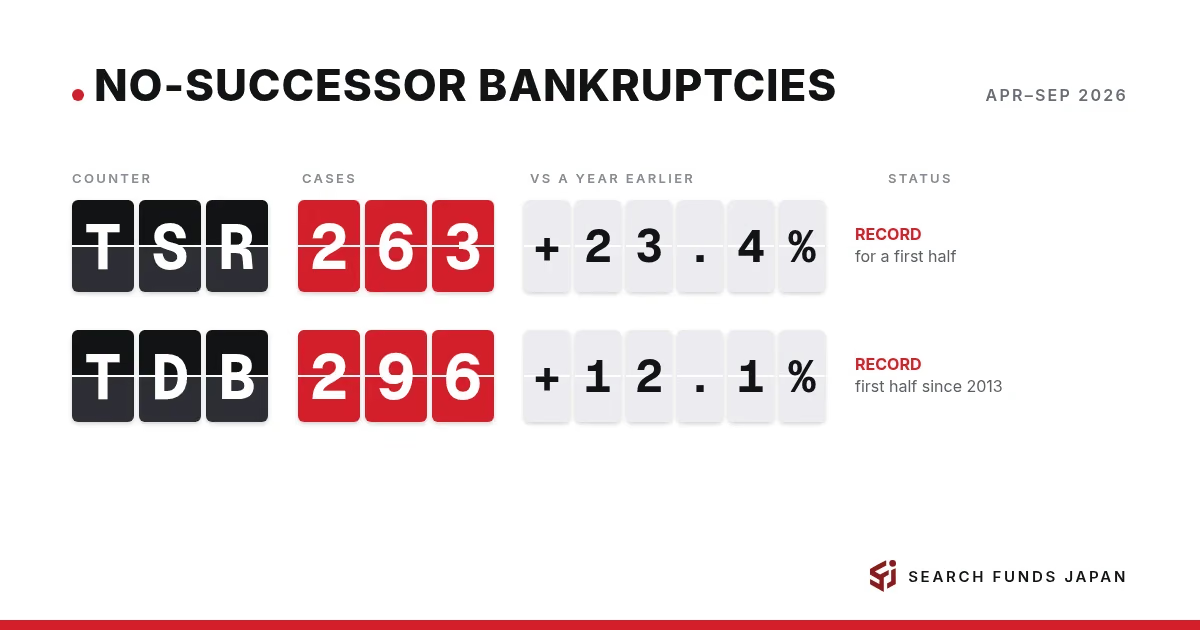
Two credit-research firms published within two days of each other and reached the same conclusion: bankruptcies attributed to a lack of successor reached a record for a first half in April–September 2026. Tokyo Shoko Research (TSR) counted 263 cases, up 23.4% on the same period a year earlier (TSR, 6 October 2026). Teikoku Databank (TDB) counted 296 cases, up 12.1% (TDB, 8 October 2026). Both count only failures with debts of ¥10 million or more, but TSR takes its figure from its tally of labour-shortage bankruptcies and includes out-of-court cases, while TDB counts only cases that went through court proceedings.
What the two reports say
- TSR: 263 cases, the first rise in three years. The previous first-half high was 222, in FY2023.
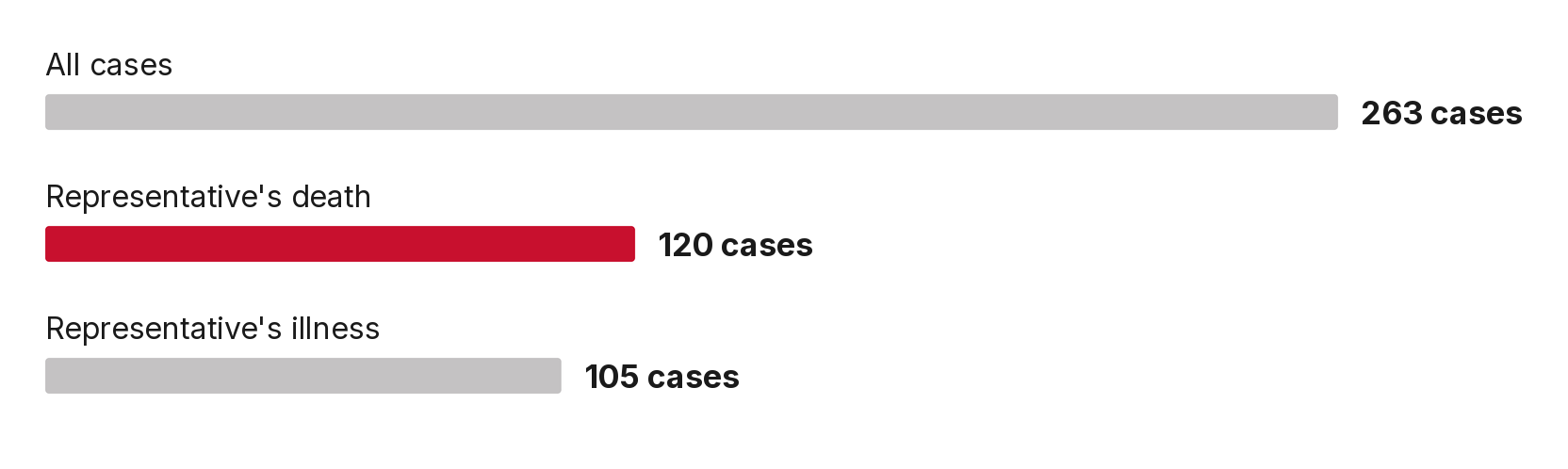
- TSR: the representative's death (120 cases) or illness (105) accounts for 225 cases, 85.5% of the total.
- TSR: 180 cases (68.4%) were companies with capital under ¥10 million, and 249 (94.6%) ended in bankruptcy proceedings.
- TDB: 296 cases against 264 a year earlier, the highest first half since its series began in FY2013. At this pace, TDB expects about 600 for the full fiscal year.
- TDB: by industry, construction 70, services 57, retail 56, manufacturing 47.
Kansai, and the support side
TDB's report does not split successor-related cases by region, so there is no Kansai figure for them. For all causes combined, it counts 1,359 bankruptcies in Kinki (1,298 a year earlier, +4.7%), the most for a first half in ten years, and 327 in Hyogo, the most for a first half since FY2000.
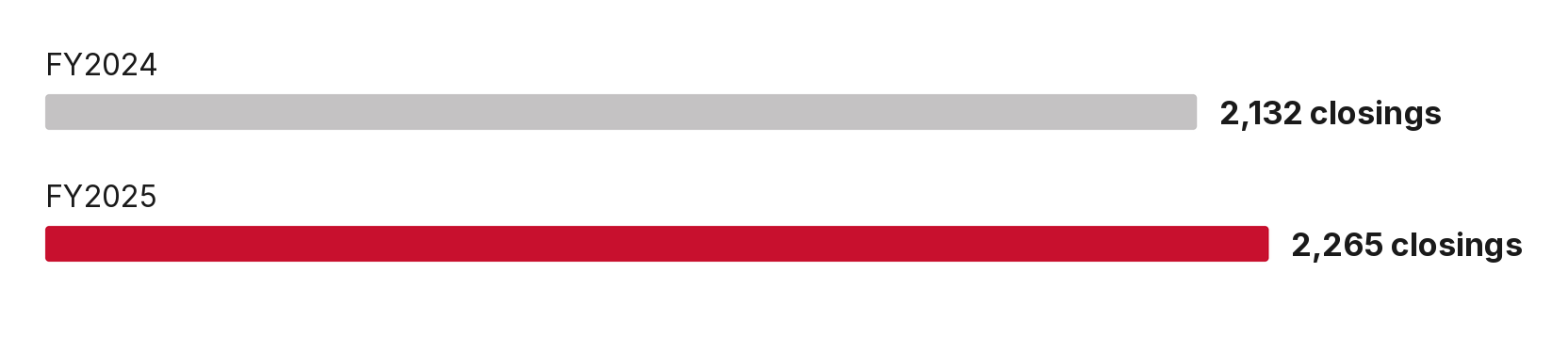
On the other side of the ledger, the national Business Succession and Handover Support Centers, whose results SMRJ compiles, reported third-party succession (M&A) closings of 2,265 in FY2025, a record, up from 2,132 in FY2024. New third-party-succession clients rose from 16,045 to 16,322, and completed family-succession plans from 1,695 to 1,903 (both years include SMRJ regional-HQ joint cases: 160 and 217). Fiscal years run April to March; the FY2025 release is dated 29 May 2026.
Our reading
This is our reading, not TSR's or TDB's. When death or illness of the representative accounts for most of these cases, the trigger is usually sudden, so the gap that matters is timing: whether any plan exists before it happens. TSR itself says that the later preparation starts, the more likely such bankruptcies are to rise. For searchers, the numbers fit a picture of real demand for orderly handovers, but they cannot show how many of these owners wanted one, or would have accepted an outside buyer.
Sources
- Tokyo Shoko Research: 'Successor difficulty' bankruptcies, April–September 2026 (6 Oct 2026) (retrieved 2026-10-22)
- Teikoku Databank: National bankruptcy tally, first half of FY2026 (8 Oct 2026) (retrieved 2026-10-22)
- SMRJ: FY2025 results of the Business Succession and Handover Support Centers (29 May 2026) (retrieved 2026-10-22)
- SMRJ: FY2024 results of the Business Succession and Handover Support Centers (30 May 2025) (retrieved 2026-10-22)