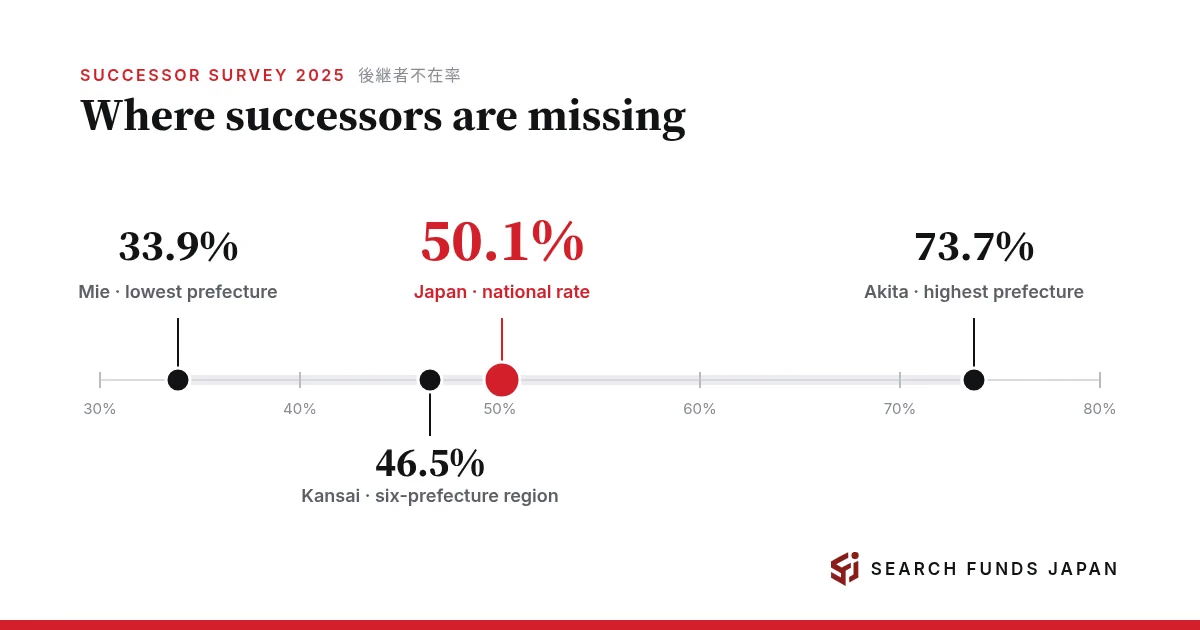
In its 12th survey, Teikoku Databank (TDB) reports that 50.1% of the Japanese companies it could assess had no successor, or had not decided on one, in 2025. That is 2.0 points lower than a year earlier, the seventh improvement in a row, and 16.4 points below 2017, the highest level in the decade since its 2016 survey. TDB looked at about 270,000 companies; about 138,000 had no decided successor. The national report was published on 21 November 2025.
Where the gap is closing
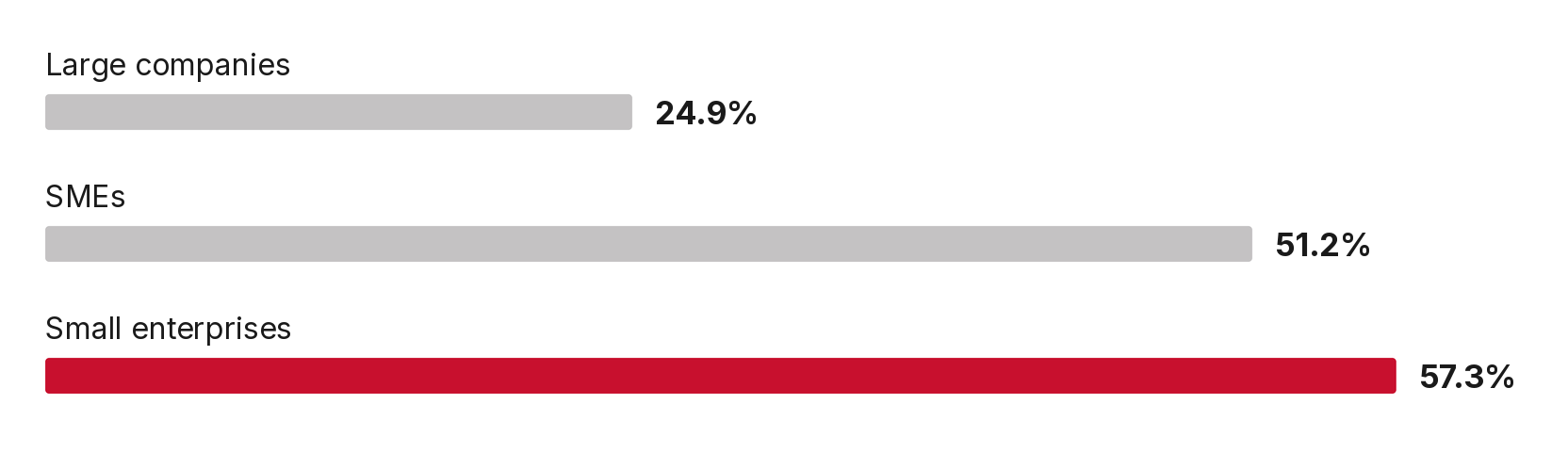
- By size: 24.9% for large companies, 51.2% for SMEs and 57.3% for small enterprises. The smaller the company, the slower the improvement.
- By industry: all eight industries are now below 60% for the first time. Manufacturing is lowest (42.4%) and construction highest (57.3%).
- By prefecture: Mie is lowest (33.9%). Akita is highest (73.7%) and the only prefecture above 70%.
- By owner age: 83.2% for owners under 30, 58.3% for owners in their 50s, and 22.2% for owners aged 80 and over.
Kansai is ahead of the national rate
TDB's Kinki report, published on 8 December 2025, covers 48,914 companies in the six prefectures of Kinki. Their rate is 46.5%, a record low, 0.4 points below the previous year and 3.6 points below the national figure. The slowdown is visible there too: the year-on-year fall is small compared with the pandemic years.
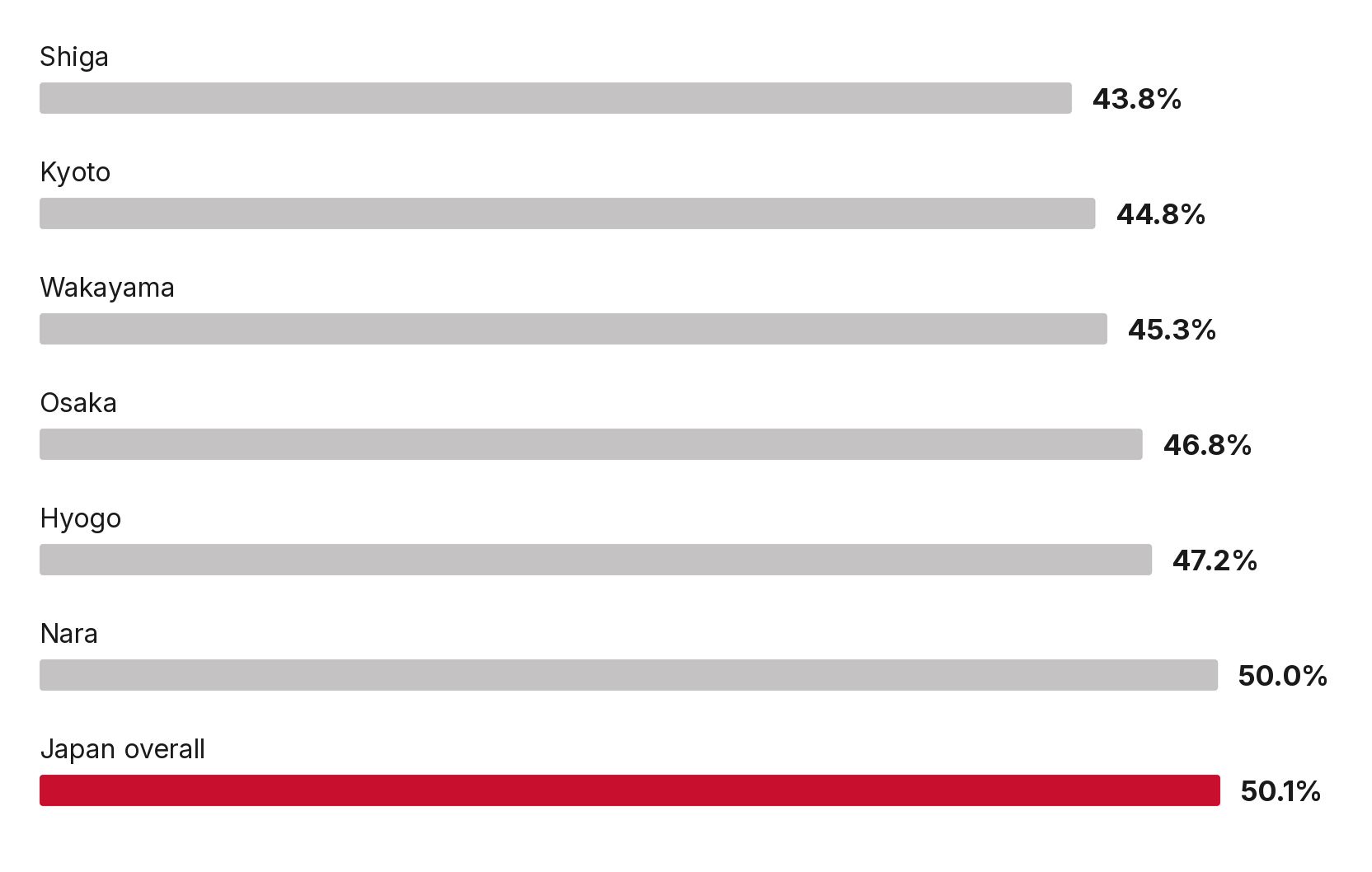
- By prefecture: Shiga is lowest (43.8%) and Nara highest (50.0%). Kyoto is 44.8%, Wakayama 45.3%, Osaka 46.8% and Hyogo 47.2%. Every prefecture is below the national rate. Kyoto, Nara and Wakayama rose from the year before.
- By size: 23.8% for large companies, 47.3% for SMEs and 53.6% for small enterprises.
- By industry: manufacturing is lowest (38.7%); construction is highest (55.4%) and rose 0.6 points.
Who is taking over
Among companies that changed president in 2025 (preliminary figures), promotion of a non-family executive or employee accounted for 36.1% of cases, ahead of family succession at 32.3%. M&A and other routes were 20.6% and outside appointments 7.6%. Among named successor candidates, non-family people are now 41.0%, above 40% for the first time. TDB adds that a run of bad-buyer M&A cases in 2024 may have made owners warier of selling to third parties.
What we take from it
This is our reading, not TDB's. The rate is falling, but TDB expects it to hover around 50% because many older owners simply decide to close instead of handing over. At the same time, handing a company to someone outside the family is becoming ordinary. For a searcher that points to a market where willing owners exist, and where trust is the scarce thing: owners will judge a buyer on evidence of how they run a company, not on price alone.
Sources
- Teikoku Databank: National successor-absence survey 2025 (21 Nov 2025) (retrieved 2026-10-22)
- Teikoku Databank: Kinki successor-absence survey 2025 (8 Dec 2025) (retrieved 2026-10-22)